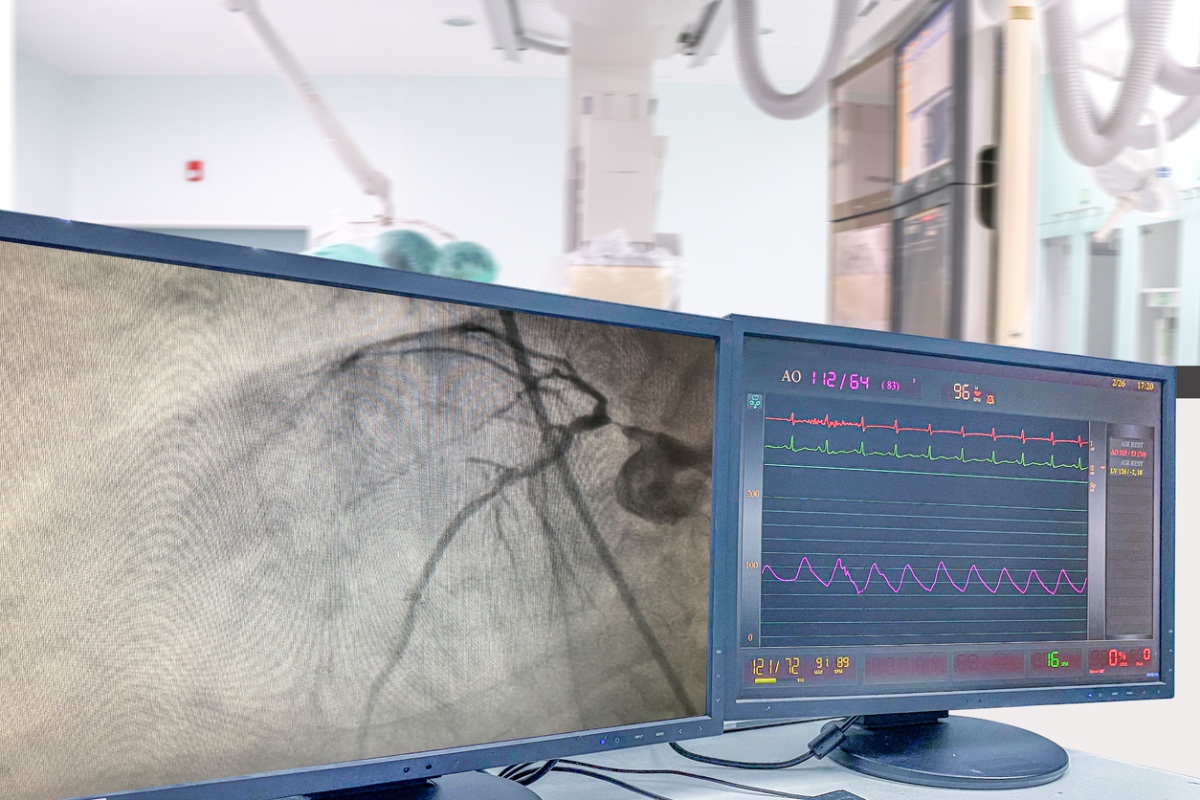
Patient and clinician safety during procedures performed in the radiology suite is fundamental to delivering high-quality medical care. As image-guided procedures become increasingly common, radiology teams must balance procedural efficiency with practices that reduce the risk of complications.
Many patients undergoing radiologic interventions have complex medical conditions and may require sedation, vascular access, or prolonged fluoroscopic imaging. These factors increase the importance of standardized safety measures that protect both patients and healthcare professionals throughout every stage of care. A strong culture of safety promotes consistent practice, encourages communication among team members, and helps prevent avoidable adverse events (1).
Radiation exposure remains one of the primary safety concerns in the radiology suite. Fluoroscopy and other imaging technologies expose both patients and clinicians to ionizing radiation, particularly during lengthy or technically challenging procedures. The goal is not to eliminate radiation, since it is essential for image guidance, but to use only the amount necessary to achieve a successful outcome. The principle of keeping radiation exposure “as low as reasonably achievable” (ALARA) continues to guide modern radiologic practice (2).
Protective equipment (including lead aprons, thyroid shields, leaded eyewear, and ceiling-mounted barriers) helps to reduce occupational exposure for clinicians. Personal dosimeters also allow clinicians to monitor cumulative radiation doses and confirm that exposure remains within recommended limits (3).
Safety also depends on careful preparation before the procedure begins. Verifying the patient’s identity, confirming the planned procedure, and reviewing allergies, medications, and relevant laboratory results reduce preventable errors. Obtaining informed consent ensures that patients understand the benefits and potential risks before treatment. Many radiology departments also use standardized checklists that improve communication among physicians, nurses, and technologists. These simple tools help ensure that important steps are not overlooked and contribute to safer, more consistent patient care (3).
During the procedure, continuous patient monitoring allows the clinical team to recognize complications early. Patients receiving moderate or deep sedation require close observation of their heart rate, blood pressure, oxygen saturation, and respiratory status. Prompt recognition of physiologic changes enables clinicians to intervene before a minor problem becomes a serious emergency. Careful monitoring is particularly important for older adults and patients with significant underlying medical conditions, who may have a greater risk of sedation-related complications (3).
Preventing infection is another essential component of procedural safety. Image-guided biopsies, vascular interventions, and drainage procedures all require meticulous sterile technique. Consistent hand hygiene, appropriate skin antisepsis, and the use of sterile barriers reduce the risk of healthcare-associated infections. Radiology equipment and procedure rooms must also be cleaned according to established infection-control standards. These practices protect individual patients while reducing opportunities for cross-contamination within the department (4).
Finally, ergonomic considerations are often overlooked but remain relevant to the discussion of safety in the radiology suite. Interventional radiologists, technologists, and nurses often wear heavy protective equipment for extended periods, placing considerable strain on the neck, shoulders, and lower back. Ergonomic workstations, adjustable equipment, and suspended radiation protection systems can lessen this physical burden without compromising radiation safety.
Ongoing education and routine safety training reinforce best practices while encouraging staff to report hazards and near misses. Learning from these events supports continuous quality improvement and strengthens the overall safety culture within the radiology suite (4).
References
Valentin J. Avoidance of radiation injuries from medical interventional procedures. Ann ICRP. 2000;30(2):7-67. doi:10.1016/S0146-6453(01)00004-5
Miller DL, Balter S, Cole PE, et al. Radiation doses in interventional radiology procedures: the RAD-IR study: part I: overall measures of dose. J Vasc Interv Radiol. 2003;14(6):711-727. doi:10.1097/01.rvi.0000079980.80153.4b
Lee MJ, Fanelli F, Haage P, Hausegger K, Van Lienden KP. Patient safety in interventional radiology: a CIRSE IR checklist. Cardiovasc Intervent Radiol. 2012;35(2):244-246. doi:10.1007/s00270-011-0289-5
Miller DL, Vañó E, Bartal G, et al. Occupational radiation protection in interventional radiology: a joint guideline of the Cardiovascular and Interventional Radiology Society of Europe and the Society of Interventional Radiology. J Vasc Interv Radiol. 2010;21(5):607-615. doi:10.1016/j.jvir.2010.01.007